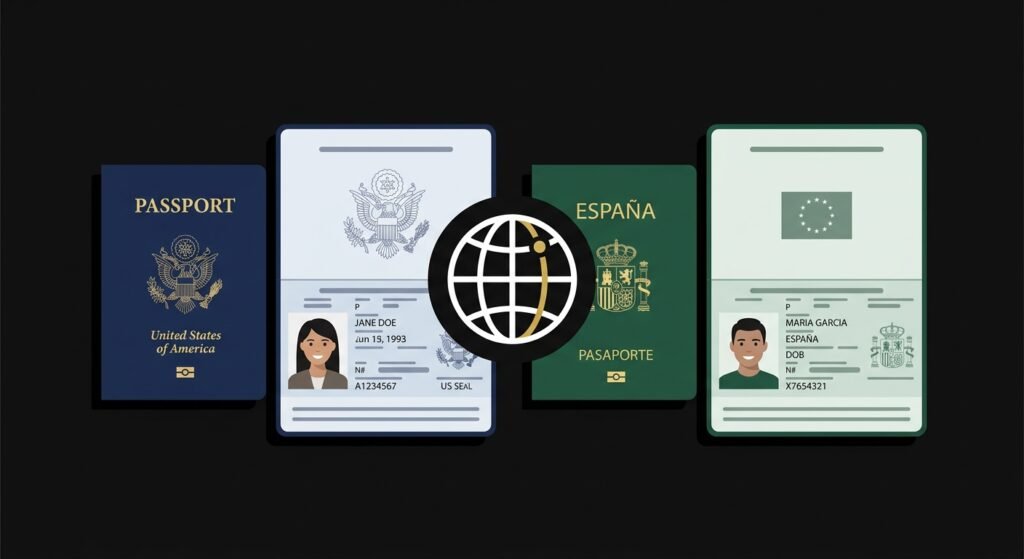
Grenada and Turkey are the only CBI programs that give holders treaty access to the US E-2 investor visa, meaning after renouncing US citizenship you can still live and work in the United States legally under a foreign passport, a combination almost no advisors mention upfront.
Why US Citizens Have More to Gain from CBI Than Almost Anyone
The United States taxes citizens on global income regardless of residency, so holding only a US passport means the IRS follows you everywhere. A second citizenship from a territorial or zero-tax country gives you a legal path to renounce US citizenship once you have established residency elsewhere and met the five-year expatriation requirements under IRC Section 877A. Without that second passport in hand before you renounce, you have no travel document and no legal residency anchor, which is why Americans typically need CBI earlier in the process than citizens of other countries.
Caribbean Programs: The Fastest and Cheapest Route to a Second Passport
Five Caribbean nations, St. Kitts and Nevis, Dominica, Grenada, Antigua and Barbuda, and St. Lucia, all offer citizenship in four to six months with no residency requirement and no visit required. Donation-route minimums start at roughly $100,000 for a single applicant in Dominica and St. Lucia, rising to $130,000 in Grenada and Antigua, and approximately $150,000 in St. Kitts after their 2023 price increase. Grenada is the standout for Americans specifically because it maintains a treaty with the US that allows Grenadian citizens to apply for an E-2 investor visa, giving you a legal US residency pathway under a non-US passport once you have renounced. A full breakdown of every live CBI country with real costs and passport strength comparisons is here.
Europe: Malta, Turkey, and Vanuatu for Stronger Travel Documents
Malta's citizenship by naturalization program requires a 12-month residency period, a minimum EUR 600,000 contribution to the national development fund, plus EUR 700,000 in real estate or EUR 150,000 in government bonds, putting the total outlay above EUR 1 million for most applicants. The Maltese passport opens 186-plus destinations including the entire Schengen area and the UK, making it the strongest passport available through investment. Turkey offers citizenship for a real estate purchase of at least $400,000 and processes in roughly three to four months, delivering a passport with access to about 110 destinations and the right to apply for a US E-2 visa, similar to Grenada. Vanuatu is the fastest program globally, often completing in under two months, with a donation starting around $130,000 for a single applicant, and while its visa-free access is limited, it is frequently used by Americans solely as a stepping stone toward renunciation.
The Expatriation Tax Calculation and Why Passport Timing Matters
US citizens who renounce and have a net worth above $2 million, or an average annual net income tax liability above $190,000 for the five preceding years (indexed annually), are classified as covered expatriates under IRC Section 877A and face a mark-to-market exit tax on unrealized gains as if all assets were sold the day before expatriation. Holding a CBI passport for at least one year before you renounce is not required by US law, but it is a practical necessity since renunciation appointments at US consulates often take six to eighteen months to schedule, and you need a valid foreign passport to present at the appointment. Running the exit tax calculation before purchasing any CBI program is non-negotiable, because the program cost is trivial compared to a poorly timed renunciation that triggers gains on a concentrated stock position or appreciated real estate.
Real Estate Routes vs. Donation Routes: Which Makes More Sense for Americans
Donation routes are non-refundable contributions to a government fund, so they are a pure cost. Real estate routes in programs like Grenada, St. Kitts, and Portugal's Golden Visa allow you to buy an approved property that can be resold after a holding period, typically three to five years, recovering a portion of the outlay. For Americans who already want offshore property as part of a diversification strategy, a real estate CBI route turns a planned purchase into a dual-purpose transaction. The practical downside is that government-approved CBI real estate in the Caribbean is almost always resort-share inventory or managed developments, not freehold land you control outright, so the resale market is narrower and the recovery value is uncertain.
Due Diligence, Banking, and FATCA Disclosures During the Process
Every reputable CBI program runs a background check that includes criminal history, source-of-funds verification, and often a biometric component. Americans must continue filing US tax returns and FBAR disclosures while holding US citizenship, including during the period after obtaining a second passport and before completing renunciation. Foreign banks in jurisdictions where you apply for CBI residency or citizenship will also run their own FATCA compliance checks and may require proof of tax compliance before opening accounts. Getting FATCA-compliant account setup and source-of-funds documentation organized before you apply speeds up both the CBI application and any associated banking significantly.
Things people ask first.
Can a US citizen hold dual citizenship through a CBI program?
Yes. The United States does not prohibit dual citizenship, so acquiring a second passport through investment does not automatically affect your US citizenship. You remain a US citizen with all associated tax obligations until you formally renounce at a US consulate.
Does getting a second passport through investment reduce my US tax liability?
Not while you hold US citizenship. The second passport only reduces your tax liability after you have renounced and completed the expatriation process under IRC Section 877A. The passport is the prerequisite for renunciation, not the tax solution itself.
Which CBI program is best for a US citizen who wants to eventually renounce?
Grenada is frequently the top pick because it processes in four to six months, costs around $130,000 via donation for a single applicant, and its E-2 treaty with the US allows you to return to live in America after renouncing. Dominica is cheaper at around $100,000 but lacks the E-2 treaty benefit.
How long does it take to get a second citizenship through investment as a US citizen?
Caribbean programs typically take four to six months from application to passport issuance. Vanuatu can complete in under two months. Malta takes a minimum of twelve months due to its mandatory residency period. After you have the passport, scheduling a renunciation appointment at a US consulate can add another six to eighteen months depending on the location.
What is the exit tax and how much will I owe when I renounce?
If you qualify as a covered expatriate, the exit tax treats all your worldwide assets as sold at fair market value on the day before expatriation, and you pay capital gains tax on the unrealized gain above an annual exclusion amount (roughly $866,000 in 2024, indexed for inflation). The actual liability depends entirely on your asset base, cost basis, and applicable gains rates, so running this calculation with a US international tax attorney before buying any CBI program is essential.
Do CBI countries share information with the IRS?
Under FATCA, most CBI jurisdictions including Caribbean nations and EU member states have intergovernmental agreements requiring their financial institutions to report accounts held by US persons to the IRS. Your new citizenship does not shield your existing US tax obligations or financial accounts from this reporting while you remain a US citizen.
Ready to map out your full exit from US worldwide taxation?
The Offshore Playbook walks through the exact sequence: which CBI program fits your timeline and budget, how to structure assets before the exit tax calculation, and how to set up banking after renunciation. Gramps.chat can help you pressure-test the numbers before you commit.
Get the Playbook