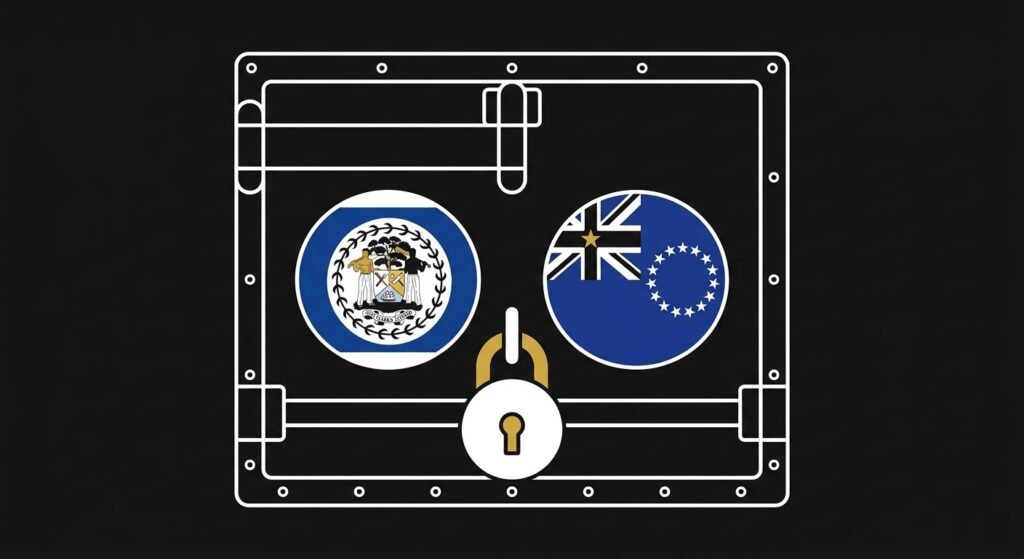
Cook Islands trusts have survived contempt orders in U.S. federal court because the trustee is physically outside U.S. jurisdiction. No Belize trust has been tested under the same pressure, which is the single most important fact in this comparison.
Cook Islands Trust
The Cook Islands is the gold standard for offshore asset protection trusts, and that reputation is earned. No U.S. or other foreign court judgment is enforceable there without re-litigating the claim from scratch in Cook Islands courts under Cook Islands law, which does not recognize fraudulent transfer claims brought by foreign creditors after the trust is established. The statute of limitations for creditor challenges runs just two years from the date of transfer, or one year from when the creditor could have discovered the transfer. Setup costs run roughly $10,000 to $20,000 through a reputable trustee, with annual fees in the $3,000 to $5,000 range. For a deeper breakdown of how this compares to the next-closest competitor, see this Cook Islands Trust vs Nevis Trust comparison.
Belize Trust
Belize enacted its Trusts Act in 1992 specifically to attract offshore business, and the statute does offer self-settled spendthrift trust protection similar in structure to Cook Islands. The creditor challenge period under Belize law is two years from the date of transfer. Where Belize falls short is track record: there is almost no published case law testing Belize trust protections under real litigation pressure from U.S. creditors, which means the statute looks good on paper but its real-world enforceability is unproven. Setup costs are lower, typically $3,000 to $8,000, which is why Belize trusts get marketed aggressively by cheaper promoters. For serious asset protection where a creditor is actually likely to sue and push hard, that cost savings is not worth the uncertainty.
The Core Tradeoff: Price vs Proven Protection
The price gap between these two jurisdictions is real, but so is the protection gap. Cook Islands trustees have faced direct contempt battles in U.S. federal courts and the structures held. Belize has not been stress-tested in that same way. If you are protecting against a theoretical future creditor and budget is genuinely tight, Belize is not useless. If you have an existing business with litigation exposure, a high net worth, or a specific creditor already circling, the Cook Islands is the only rational choice. Fraudulent transfer timing matters in both jurisdictions: assets moved after a threat is known can be unwound regardless of where the trust is domiciled, so structuring before any claim arises is non-negotiable in either case.
Who Each Jurisdiction Fits
Cook Islands fits high-net-worth individuals, business owners in litigious industries such as medicine, real estate, and construction, and anyone who wants a structure that has actually been attacked and survived. Belize fits someone who needs a basic offshore trust framework at lower cost, does not face imminent litigation risk, and understands they are accepting an untested statute. Either way, the trust needs to be funded properly, the trustee needs to be genuinely independent, and the settlor cannot retain so much control that a U.S. court treats the arrangement as a sham. Asset protection trust costs vary more than most people expect once you factor in ongoing compliance, trustee fees, and any LLC layering underneath the trust.
Things people ask first.
Can a U.S. court force you to hand over assets in a Cook Islands trust?
A U.S. court can order you to repatriate assets and hold you in contempt if you refuse, but it cannot compel the Cook Islands trustee to act. If the trust is properly drafted with a duress clause, the trustee is actually prohibited from complying with a foreign court order, and since the trustee is in the Cook Islands, U.S. contempt sanctions cannot reach them.
Is a Belize trust legal for U.S. citizens?
Yes, it is legal. U.S. citizens must report foreign trusts to the IRS on Form 3520 and 3520-A annually. The trust itself does not eliminate U.S. tax obligations, it only protects assets from creditors. Failure to file the required disclosures results in substantial penalties.
How long does it take to set up a Cook Islands trust?
A properly drafted Cook Islands trust takes roughly four to eight weeks from engagement to execution, depending on the trustee and the complexity of the asset structure going into it. Do not use a provider offering to close in under two weeks without a very good explanation.
What assets can go into these trusts?
Cash, brokerage accounts, and interests in LLCs are the most common assets funded into offshore trusts. Real estate titled in your personal name is harder to move offshore directly, which is why most practitioners pair the trust with an onshore or offshore LLC holding the real property.
Does moving assets into the trust trigger gift or transfer taxes?
Transferring assets into a self-settled trust where you remain a discretionary beneficiary is generally not a completed gift for U.S. gift tax purposes, so it does not trigger gift tax. However, this also means the assets remain in your estate for estate tax purposes. Get a tax attorney involved before funding any offshore trust.
Can a creditor challenge an offshore trust as a fraudulent transfer?
Yes, if assets are moved after a claim exists or after a creditor was identifiable as a threat, a fraudulent transfer claim can still succeed even with an offshore trust. Both Belize and Cook Islands law have fraudulent transfer provisions, though Cook Islands applies them more narrowly than U.S. state law equivalents. Timing is the single most critical factor in whether an offshore trust holds up.
Ready to build a trust structure that actually holds under pressure?
The Offshore Playbook walks through exactly how Cook Islands and Belize trusts are structured, funded, and layered with LLCs to create a creditor-resistant stack, including the timing rules that determine whether yours survives an attack.
Get the Playbook